On October 31, 2025, as part of the 3rd International Scientific and Practical Conference “Challenges and Prospects for Sustainable Socio-Economic Development of Territories,” the Karazin Business School hosted a special session titled “Human Potential in the Modern World: Digital Transformation, Emotional Resilience, and the Challenges of the Silver Economy.”
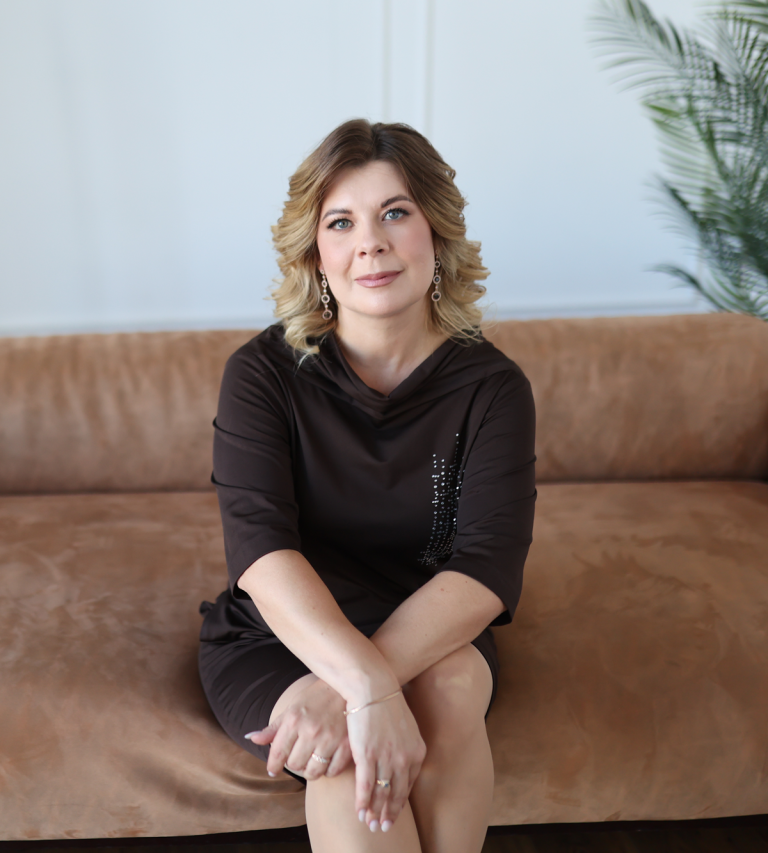
Among the invited speakers was Olesia Ulianova, Ph.D., MBA — founder of IT Grow Center and CEO of Telesens, a recognized expert in team development and soft skills.
Her presentation, “From Digital Change to Emotional Resilience: How to Manage People Effectively in a Post-Crisis World,” sparked active discussion among the forum participants.
The New Reality of Management: From VUCA to BANI
“We no longer live in a VUCA world — we live in a BANI world. And that means old management methods simply don’t work anymore,” — emphasized Olesia Ulianova.
She explained that digital transformation has become a source of constant emotional strain — the speed of technological change now exceeds the speed of human adaptation.
“Many managers today lead not people, but digital shadows — statuses, tasks, and metrics.
But teams aren’t Jira boards or KPIs. They’re living people — with emotions, fears, and ambitions.”
Three Levels of Resilience for the Modern Manager
Olesia Ulianova highlighted three interrelated levels of resilience:
💪 Personal — self-regulation, energy boundaries, and healthy rhythms;
🤝 Team — psychological safety, trust, and a culture of feedback;
🏢 Organizational — rituals of support, transparent communication, and balance-oriented policies.
“A team mirrors the emotional state of its leader.
When the leader burns out, the system begins to crack,” — she stressed.
How to Support Emotional Resilience in Teams
Olesia shared several practical tools for managers and teams:
🔹 Emotional check-ins — simple questions like “How are you today?”
🔹 Normalizing pauses and time-outs — as a form of burnout prevention.
🔹 Support anchors — short, grounding phrases that create safety.
🔹 Micro-rituals — morning syncs without tasks, gratitude rounds, Slack channels for “Small Wins.”
“Emotional resilience isn’t about ‘never burning out.’
It’s about the ability to recover,” — summarized the speaker.
From Control to Evolution
Olesia presented a new management model — Recognize – Grow – Adapt, centered on development, not control:
- Recognize: See strengths even in times of crisis.
- Grow: Create growth opportunities through projects.
- Adapt: Allow people to evolve, change roles, and redefine trajectories.
“The meaning of the new era isn’t control — it’s evolution,” — emphasized Ulianova.
The Portrait of a Future Manager
According to Olesia, an effective manager in a post-crisis world is someone who is:
🧭 Psychologically mature — understands themselves and their emotions;
💻 Digitally literate — aware of how technology affects people;
💡 An empathetic strategist — combines systems thinking with emotional intelligence;
🤲 A facilitator, not a controller — creates the right environment instead of pushing processes.
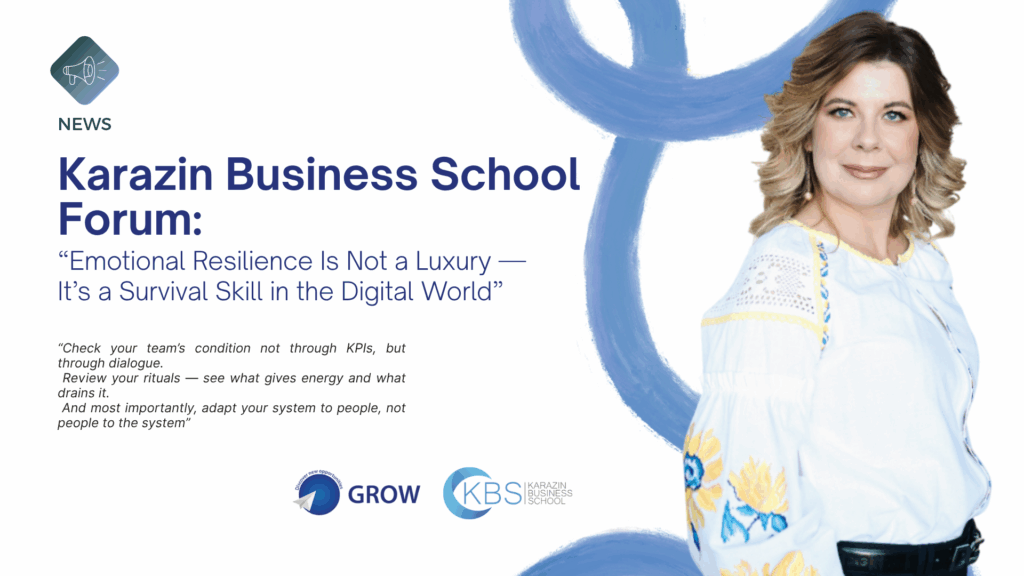
“Check your team’s condition not through KPIs, but through dialogue.
Review your rituals — see what gives energy and what drains it.
And most importantly, adapt your system to people, not people to the system,” — concluded Olesia Ulianova.